

Pizza has long transcended its origins in Naples, Italy, to become a worldwide culinary phenomenon. Among the many factors contributing to its global success, the evolution of pizza delivery services stands out as a key element that transformed the way people enjoy this beloved dish. From humble beginnings in small neighborhood pizzerias to the sophisticated, on-demand delivery systems used today, the journey of pizza delivery reflects broader technological, social, and commercial developments. In this comprehensive article, explore the fascinating history, significant milestones, innovative trends, and future prospects of pizza delivery services around the world.
- Origins of Pizza and Early Delivery Methods
- Pizza’s Roots in Naples
- Pre-Delivery Era: How Customers Ordered Food
- The Pioneering Moments in Pizza Delivery History
- Introduction of Telephone Orders
- First Commercial Pizza Delivery
- The Growth of Pizza Delivery Services in the Late 20th Century
- Technological Innovation and the Rise of Fast Food Chains
- Domino’s Pizza: A Case Study of Delivery Focus
- The Digital Age: Online Ordering and Mobile Apps
- Shift to Internet-Based Orders
- Introduction of Mobile Applications
- Global Expansion and Innovations in Delivery
- Globalization of Pizza Delivery
- Emerging Technologies Shaping the Future
- Comparative Table of Notable Pizza Delivery Milestones
- Impact of Delivery Services on Pizza Industry and Consumer Behavior
- Changing Consumer Expectations
- Economic Effects on Local and International Markets
- Future Trends and Challenges in Pizza Delivery
- Emerging Trends
- Key Challenges
- The Continuous Evolution of Pizza Delivery
Origins of Pizza and Early Delivery Methods
Pizza’s Roots in Naples
The story begins in 18th-century Naples, Italy, where peasant communities created simple, affordable flatbreads topped with fresh ingredients. These early pizzas were designed as quick and satisfying meals, often sold by street vendors or informal food sellers. As pizza gained popularity, particularly among working-class populations, merchants began offering delivery-style options, albeit in a rudimentary form. Customers would often meet vendors at designated spots or have their orders served directly from small, mobile carts.
Pre-Delivery Era: How Customers Ordered Food
Before the advent of dedicated delivery services, ordering pizza was primarily local and face-to-face. Customers would call the pizzeria or visit in person, placing an order for pick-up or on the spot delivery by staff or informal couriers. The process was simple but limited in scope, restricted geographically, and impacted by logistical constraints of the era, such as slow transportation and lack of communication tools.
The Pioneering Moments in Pizza Delivery History
Introduction of Telephone Orders
The 20th century brought a major transformation with the introduction of telephone ordering. This advancement made it easier for customers to order pizza from their homes, reducing the need to visit pizzerias physically. The first documented use of a phone-based order system is attributed to some of the oldest pizzerias in the United States—most notably in New York and Chicago—where immigrant communities popularized the convenience of calling ahead.
First Commercial Pizza Delivery
Despite the limited scope, the first recorded commercial pizza delivery occurred in the 1950s in the United States. One notable example is the delivery service initiated by the restaurant “Pizza Hut,” which opened its doors in 1958 in Wichita, Kansas. They pioneered the concept of delivering hot, fresh pizza directly to customers’ homes, setting the stage for future growth.
The Growth of Pizza Delivery Services in the Late 20th Century
Technological Innovation and the Rise of Fast Food Chains
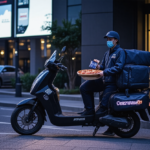
The late 20th century saw rapid expansion of fast-food chains, many of which adopted pizza as a core product. Innovations such as motorized delivery scooters, improved packaging, and more efficient ordering systems helped streamline the delivery process. Chain restaurants like Domino’s Pizza and Pizza Hut heavily invested in marketing their delivery services, emphasizing convenience and speed as their competitive edge.
Domino’s Pizza: A Case Study of Delivery Focus
Founded on the idea of delivering hot pizza within 30 minutes, Domino’s became known for its emphasis on fast, reliable delivery. Their success was driven by technological innovations like the development of their proprietary tracking system, which allowed customers to see their order progress in real time, a groundbreaking feature at the time.
The Digital Age: Online Ordering and Mobile Apps
Shift to Internet-Based Orders
The 1990s marked the transition from phone-based orders to online platforms. With the rise of the internet, pizza chains launched websites allowing customers to customize orders and pay digitally. This shift not only improved accuracy but also opened up new marketing channels and data collection opportunities.
Introduction of Mobile Applications
By the early 2000s, smartphones began transforming how consumers interacted with pizza services. Mobile apps from companies like Domino’s, Pizza Hut, and independent pizzerias enabled real-time order placement, loyalty programs, and promotional notifications. These apps also introduced features such as GPS tracking, estimated delivery times, and contactless payment options, further enhancing customer experience.
Global Expansion and Innovations in Delivery
Globalization of Pizza Delivery
Today, pizza delivery services operate worldwide. While Western countries led the initial expansion, markets in Asia, Latin America, and Africa developed their own delivery ecosystems. Local adaptation, such as incorporating regional flavors and ingredients, helped popularize pizza in diverse cultural contexts.
Emerging Technologies Shaping the Future
- Drone Delivery: Companies like Uber Eats and startups such as Flirtey experiment with drone delivery to increase speed and reduce costs.
- Robot Couriers: Autonomous delivery robots are being tested in urban environments, promising contactless service and logistical efficiency.
- Artificial Intelligence: AI-powered systems optimize delivery routes, predict order demand, and personalize marketing efforts, enhancing overall performance.
Comparative Table of Notable Pizza Delivery Milestones
| Year | Major Development | Description |
|---|---|---|
| 1950s | Beginner commercial delivery in the US | Establishment of the first delivery-focused pizzerias like Pizza Hut |
| 1980s | Introduction of online ordering | Early internet platforms allow digital order placement, improving speed and accuracy |
| 2000s | Mobile app integration | Smartphones enable real-time tracking and contactless payments |
| 2010s–present | Technological innovations and global expansion | Drone delivery, robots, AI optimize and revolutionize the service |
Impact of Delivery Services on Pizza Industry and Consumer Behavior
Changing Consumer Expectations
Customers now expect quick, reliable, and convenient service. The availability of online platforms and mobile apps has increased accessibility and empowered consumers to customize orders with ease. As a result, traditional dine-in service has seen a decline in some regions, replaced by on-demand delivery options.
Economic Effects on Local and International Markets
Delivery services have opened vast markets for pizzerias, allowing small local businesses to reach broader audiences through online listings and delivery networks. Conversely, large chains benefit from economies of scale, marketing resources, and technological infrastructure, consolidating their dominance.
Future Trends and Challenges in Pizza Delivery
Emerging Trends
- Sustainable Packaging: Focus on eco-friendly materials for reducing environmental impact.
- Contactless Delivery: Enhanced safety measures, especially post-pandemic, with no direct contact needed.
- Personalized Experiences: Leveraging data analytics for tailored marketing and menu suggestions.
Key Challenges
- Maintaining food quality during transit
- Addressing logistical complexities in dense urban environments
- Ensuring data security and privacy for digital ordering platforms
- Managing rising operational costs, especially with new delivery methods
The Continuous Evolution of Pizza Delivery
The history of pizza delivery services reflects a dynamic journey fueled by innovations in technology, changing consumer preferences, and globalization. From the earliest street vendors in Naples to high-tech delivery drones, the industry continues to evolve, emphasizing speed, convenience, and customer satisfaction. As new technologies emerge and environmental concerns grow, the future of pizza delivery will likely involve even more sophisticated, sustainable, and personalized solutions. This ongoing evolution ensures that pizza remains a universally loved dish, delivered with care and innovation to every corner of the world.
Похожие записи:
 The Role of Technology in Pizza Delivery Innovations: Transforming the Culinary Experience
  The Marketing Strategies That Popularized Pizza Worldwide
  The Influence of Italian Immigrants on Global Pizza Culture
  The Evolution of Pizza Sauce Recipes Over Time: A Delicious Journey Through History
  The Fascinating Journey of Pizza Chains and Their Worldwide Growth
  The Impact of Social Media on Pizza Marketing and Popularity
  The Evolution of New York Thin-Crust Pizza: A Culinary Heritage of Flavor and Tradition
  The Influence of World Cuisines on Pizza Toppings: A Global Culinary Journey
  The Significance of Pizza in Pop Culture and Media
  The History of Pizza Festivals and Competitions Worldwide
  The Spread of Pizza in the United States During the Post-War Era: A Culinary Revolution
  The Role of Local Ingredients in Regional Pizza Recipes: A Culinary Journey Across Cultures
  The Fascinating History of the First Recorded Pizza Recipe: From Ancient Origins to Modern Delight
  South African Queen Pizza with Local Flavors: A Tasty Fusion of Tradition and Innovation
  Maltese Ftira with Local Flavors: A Delicious Twist on Traditional Pizza
  The Technological Innovations in Pizza Baking Techniques: Transforming Tradition into Modern Masterpieces