
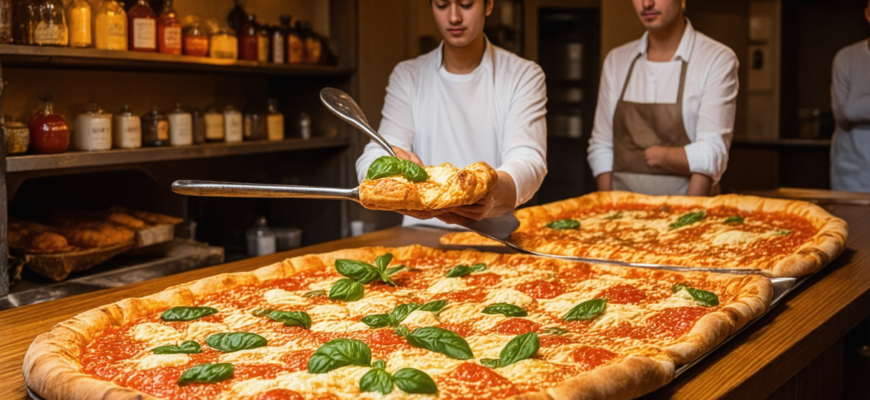
From the bustling streets of Rome to the global culinary scene, pizza al taglio — or “by the cut” — has become a symbol of quick, delicious, and customizable street food. Distinctive for its rectangular slices and traditional baking style, Roman pizza al taglio offers a unique experience for pizza lovers worldwide. This comprehensive guide delves into its fascinating history, unique preparation methods, regional variations, and the reasons behind its characteristic rectangular shape.
- Introduction to Roman Pizza al Taglio
- What Is Pizza al Taglio?
- Historical Background of Pizza al Taglio
- Origins of Pizza al Taglio
- Evolution Through Time
- Preparation Techniques and Ingredients
- Basic Dough Recipe
- Custumizable Toppings
- The Rectangular Slice: Why and How
- Reasons Behind the Rectangular Shape
- How to Cut Pizza al Taglio
- Regional Variations and Modern Innovations
- Different Styles Across Italy
- Global Innovations and Trends
- Comparing Pizza al Taglio and Other Styles
- Why Pizza al Taglio Continues to Charm Food Enthusiasts
- Self-Preparation Tips for Home Cooks
- DIY Pizza al Taglio
- Sample Step-by-Step
- The Enduring Appeal of Rectangular Pizza
Introduction to Roman Pizza al Taglio
Roman pizza al taglio stands apart from its Neapolitan counterpart primarily through its presentation and preparation style. Unlike traditional round pizzas served whole, pizza al taglio is baked in large rectangular trays and sliced into portions according to consumer preference. This method originated in Rome and is deeply rooted in local culinary culture, making it an essential part of Italian street food.
What Is Pizza al Taglio?
The term “al taglio” translates to “by the cut” in Italian. It refers to a style of pizza that is baked in large rectangular or square trays and then cut into straightforward rectangular slices. Customers can purchase precisely the amount they desire, making it a flexible option for a quick snack or a full meal.
Historical Background of Pizza al Taglio
Origins of Pizza al Taglio
The origins of pizza al taglio trace back to ancient Italy, but its modern form developed in Rome during the late 19th and early 20th centuries. Traditionally, it was a practical way for street vendors and bakeries to serve fresh and affordable food to a diverse urban population.
Roman bakery masters began baking large, flat dough sheets topped with seasonal ingredients, which could be sliced and sold rapidly. The rectangular shape was mainly dictated by the baking trays used, facilitating mass production and easy cutting.
Evolution Through Time
Initially, pizza al taglio was a simple, rustic dish made with basic ingredients, but over time, it evolved into a sophisticated culinary art with numerous regional variations. Today, it combines traditional techniques with innovative toppings, appealing to contemporary palates worldwide.
Preparation Techniques and Ingredients
Basic Dough Recipe
At the core of pizza al taglio is its dough. The specific characteristics turning it into a delicious base include its hydration level, fermentation protocol, and ingredients quality. A typical dough recipe includes:
- Flour (preferably Type 00 or bread flour) – 500 grams
- Water – 300-350 ml (depending on hydration preference)
- Sea salt – 10 grams
- Olive oil – 50 ml
- Fresh yeast or dry yeast – 7 grams
Preparation steps:
- Activate yeast in warm water if using fresh yeast.
- Mix flour and salt in a large bowl.
- Add yeast mixture and olive oil to dry ingredients.
- Work the dough until smooth and elastic, usually about 10-15 minutes.
- Allow the dough to ferment, typically for 1-2 hours at room temperature, or until doubled in size.
- Shape the dough into a large rectangle to fit the baking tray.
Custumizable Toppings
One hallmark of pizza al taglio is its vast variety of toppings, which can be tailored per taste. Classic toppings include:
- Fresh tomatoes and basil (Margherita style)
- Sausage, peppers, and onions
- Artichokes, olives, and anchovies
- Prosciutto and arugula
- Mixed vegetables and cheeses
Cheeses such as mozzarella, ricotta, or pecorino are evenly spread over the dough. The toppings are added before baking, with some pizzerias experimenting with drizzles of olive oil or balsamic vinegar after baking for extra flavor.
The Rectangular Slice: Why and How
Reasons Behind the Rectangular Shape
The rectangular shape of pizza al taglio stems from practical reasons:
- Efficiency in Baking: Large rectangular trays maximize oven space and facilitate uniform baking.
- Ease of Cutting: It’s easier to cut into precise rectangular portions, appealing to customers choosing different sizes.
- Portion Control: Customers can buy exactly the amount they want, ranging from small squares to larger slices.
- Aesthetic and Tradition: The visual appeal of neatly cut rectangular slices has become a trademark and part of its identity.
How to Cut Pizza al Taglio
Traditional methods involve using a pizza cutter or a sharp knife to slice along the length and width of the tray, yielding evenly sized rectangles. For presentation purposes or catering, a grid pattern ensures minimal wastage and uniformity.
Regional Variations and Modern Innovations
Different Styles Across Italy
While pizza al taglio is associated with Rome, other regions have their take, such as:
- Liguria: Focus on focaccia-like bases with aromatic herbs and seafood toppings.
- Trentino-Alto Adige: Incorporate hearty ingredients like speck and regional cheeses.
- Northern Italy: Emphasize dairy and vegetable toppings with thinner crusts.
Global Innovations and Trends
Many contemporary chefs and pizzerias worldwide are experimenting with pizza al taglio’s concept, blending traditional techniques with international flavors, such as:
- Asian-inspired toppings (soy sauce, grilled vegetables)
- Vegan and vegetarian variants
- Gluten-free and alternative flours
- Unique crust styles (grain, seed, or cauliflower bases)
Comparing Pizza al Taglio and Other Styles
| Feature | Pizza al Taglio | Neapolitan Pizza | New York-Style Pizza |
|---|---|---|---|
| Shape | Rectangular or Square | Round | Large, wide slices |
| Baking Method | Baked in large trays | Baked in wood-fired ovens | Baked in deck ovens |
| Serving Style | Pre-cut, sold by the slice or portion | Whole or custom slices | Whole slices or pies |
| Crust Thickness | Varies — often thicker | Thin and soft | Medium to thick |
Why Pizza al Taglio Continues to Charm Food Enthusiasts
The enduring popularity of pizza al taglio can be attributed to several factors:
- Flexibility: Customers can choose their desired portion size and toppings.
- Convenience: It’s perfect for quick eats and takeaway.
- Variety: Wide array of flavors and innovative toppings cater to diverse tastes.
- Tradition: Rich history grounded in Italian street food culture adds authenticity and appeal.
Self-Preparation Tips for Home Cooks
DIY Pizza al Taglio
Although traditionally commercial, making pizza al taglio at home is accessible and rewarding. Here are key tips:
- Choose the right flour: Use high-quality Type 00 flour for a tender, chewy crust.
- Control hydration: A higher hydration dough (around 65-70%) yields a lighter texture.
- Fermentation time: Longer fermentation (up to 24 hours) enhances flavor.
- Baking adjustments: Use a baking stone or steel for optimal heat conduction.
Sample Step-by-Step
- Prepare and ferment dough as per recipe.
- Preheat oven to 250°C with baking stone or steel inside.
- Shape dough into a rectangle slightly smaller than your tray.
- Apply your chosen toppings uniformly.
- Bake for 12-15 minutes or until golden brown.
- Cut into rectangular slices and serve hot or at room temperature.
The Enduring Appeal of Rectangular Pizza
Roman pizza al taglio with its characteristic rectangular slices embodies a perfect union of tradition, practicality, and versatility. Its deep cultural roots, coupled with its adaptability to modern tastes and innovative toppings, ensure its position as a beloved street food and culinary staple. Whether enjoyed on the streets of Rome or recreated in home kitchens around the world, pizza al taglio continues to delight those seeking authentic, customizable, and delicious pizza experiences.
By understanding its history, preparation methods, and regional variations, enthusiasts can better appreciate this iconic style and even experiment with their versions. The rectangular slice—both a practical solution and a culinary canvas—remains a symbol of Roman ingenuity and an enduring favorite among pizza lovers everywhere.
Похожие записи:
 Sicilian Pizza: A Delicious Dive into Thick, Square Slices and Its Rich History
  New York-Style Thin Crust Pizza: The Iconic Street Food of the Big Apple
  Neapolitan Pizza: The Art of Authentic Preparation
  Calzone: The Folded Pizza from Italy – A Delicious Journey into Italian Cuisine
  Margarita Pizza: Italy’s Timeless Classic
  Chicago Deep-Dish Pizza and Its Hearty Layers: A Delicious Journey into Its Unique Structure